by Darpan Sachdeva
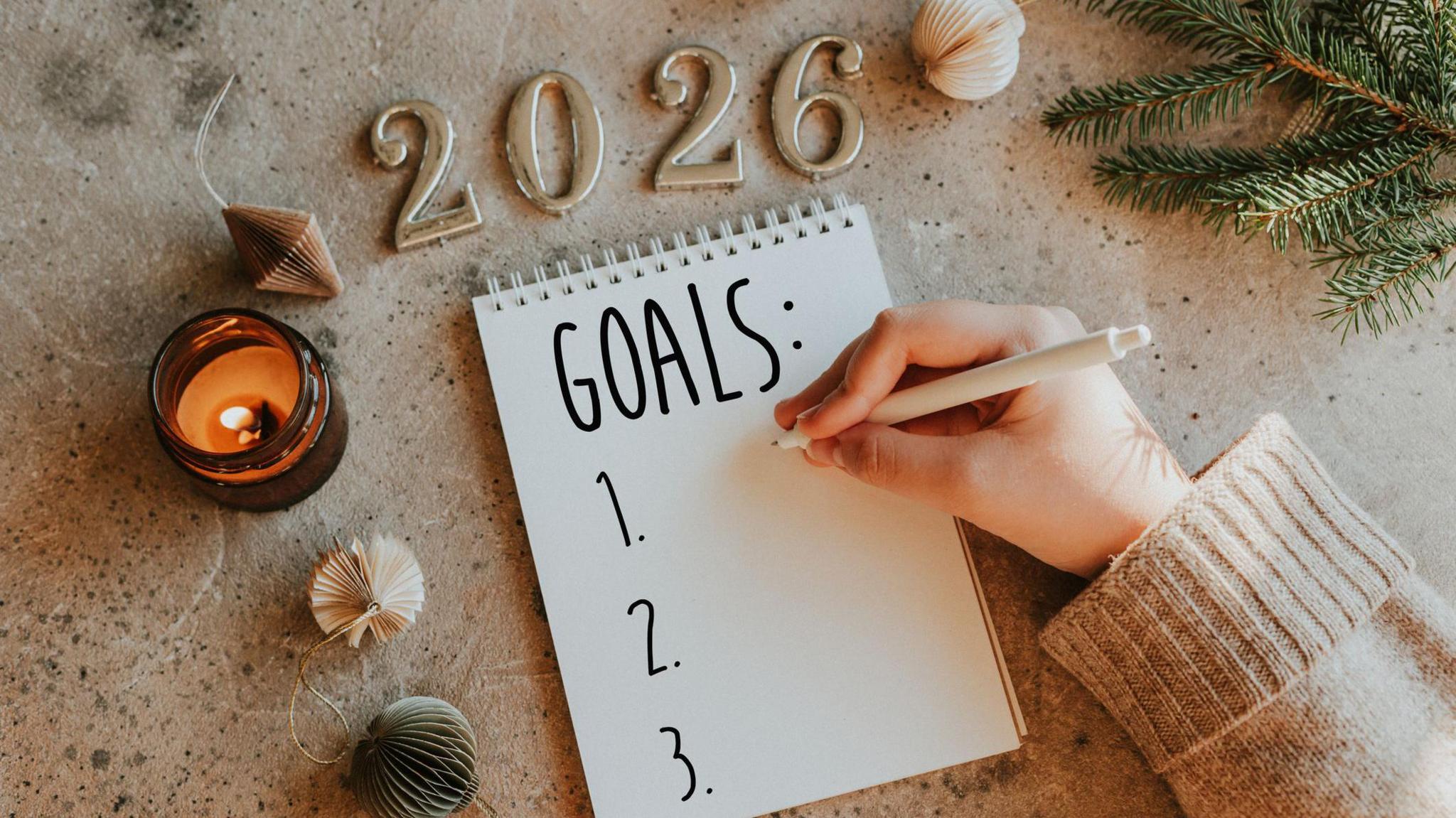
As I sit here in the quiet space between Christmas and New Year, sipping my morning coffee and watching the world slow down for just a moment, I’m struck by a profound realization that hit me during a conversation I listened to recently. It’s a truth so simple yet so devastating that it could literally determine whether 2026 becomes your breakthrough year or just another chapter of unfulfilled promises.
Here it is: You can change anything you want, but you can’t change everything you want.
Let that sink in for a moment. Because if you’re planning 2026 the way most people do, stacking goal upon goal like plates at a buffet, assuming your capacity will magically expand to accommodate it all, you’re already setting yourself up for the same disappointment that claims ninety-one percent of people who set New Year resolutions.
The Question That Changes Everything
I’ve always been fascinated by the intersection of personal development and practical wisdom, and recently I came across a question so powerful that it stopped me in my tracks. It’s deceptively simple, but I challenge you to sit with it for a few minutes:
What would have to happen by the end of 2026 for you to look back and consider it a success?
When you truly wrestle with this question, something remarkable happens. The noise fades away. The twenty competing priorities suddenly collapse into two or three things that actually matter. You realize that setting the bar unrealistically high doesn’t increase your performance; it just guarantees your failure.
Think about it like this: Your capacity is not infinite. You can’t just keep loading up your plate and expect your stomach to expand. If you want to pick something up, you have to put something down. This is the first law of meaningful change, and violating it is why most resolutions die by the end of January.
The Movie Screen Test
Here’s another question that will haunt you in the best possible way:
If your life was a movie and the audience was watching up to this point, what would they be screaming at the screen telling you to do?
You know exactly what they’d be saying, don’t you? Leave the relationship. Quit the job that’s draining your soul. Stop scrolling through your phone for three hours every night. Have the conversation you’ve been avoiding. Start the business. Write the book. Call your parents more.
The killer is always hiding in the cupboard, and everyone can see it except you. Or maybe you can see it too, but you’ve become an expert at looking away, at filling every moment with noise so you never have to sit with the truth of what you know you need to do.
“Stop taking life so seriously. No one is getting out of this game alive, and in three generations no one will even remember your name. If that doesn’t give you liberation to drop your problems for a moment and find some joy, I don’t know what will.”
The Dangerous Comfort of Region Beta
There’s a psychological phenomenon that explains why so many of us stay stuck in lives that are just okay. It’s called the Region Beta Paradox, and understanding it might be the most important thing you learn this year.
Imagine you’re traveling less than a mile. You’d walk it. But if you’re traveling two miles, you’d drive. Paradoxically, you’d arrive at the two-mile destination faster than the one-mile destination because you’d use the car. The principle? Sometimes worse situations force better solutions, while mediocre situations keep us trapped.
Think about the person in the apartment that’s kind of sketchy but really cheap. The relationship that’s not terrible but not fulfilling either. The job where your boss is annoying but the work is easy. These situations aren’t bad enough to force change, but they’re nowhere near good enough to be good. This comfortable complacency can consume years, even decades of your life.
The most spicy question I’ve encountered on this topic: Should you purposefully make your life worse to kick yourself out of Region Beta? It’s a high-risk strategy I wouldn’t recommend, but it reveals the trap we’re in. We’re choosing certain misery over uncertain possibility, and that choice is quietly killing our dreams.
Suppression Is Not Strength
For years, I’ve been in the personal development space, and I’ve seen a disturbing trend, especially among ambitious men. There’s this belief that emotions are weakness, that you should just hustle and grind until your eyes bleed, that vulnerability is something to be ashamed of.
I’ve recently come to understand something profound: Suppression isn’t the same thing as strength.
You can be ambitious and driven while also acknowledging that you feel things deeply. You can pursue mastery while also giving yourself permission to rest. You can aim high while also finding joy in small moments, a golden retriever you passed on your morning walk, a conversation with a stranger, the way light hits your coffee cup.
One of the biggest traps of modern productivity culture is what’s been called “productivity dysmorphia,” the inability to see your own success or acknowledge the volume of your output. You wake up every day feeling like you’re already behind, and only if you dominate your entire day perfectly can you drag yourself back to some minimum level of acceptable output. You never win; the best you can do is get to a draw.
If you’re using motivation and enthusiasm as your primary fuel source, you’re building your dreams on quicksand. Motivation comes and goes. You need systems, not feelings. You need to design your life so that showing up is easier than not showing up.
The Two Rules That Actually Work
After consuming countless books and conversations about habits and change, I’ve found that only two principles truly matter:
First, never miss two days in a row. One missed day is an error. Two missed days is the start of a new habit. This simple rule eliminates the all-or-nothing mentality that kills most resolutions. You’re not going to be perfect. You will miss days. Plan for it. Accept it. Then get back on track immediately.
Second, deeply understand that you never “crack” the habit code. The moment you think you’ve figured it out is precisely when you’re most vulnerable. The best habit-builders are those who are always planning for the inevitable fall, who have a strategy for getting back on the horse rather than thinking they’ll never fall off.
The Embarrassingly Small First Step
Here’s something nobody tells you about change: The first steps to transforming your life are so embarrassingly small that it feels ridiculous. You want to write a book, so day one you buy a notebook. That’s it. You want to get fit, so you put a gym bag by your door. You don’t even fill it.
We resist these tiny actions because they seem to reveal the smallness of our lives. How pitiful is it that putting on workout clothes counts as an achievement? But here’s the truth: Nobody ever wrote a book. They wrote a sentence, and then another sentence, and over time those sentences became pages, chapters, and eventually a book.
Every journey you admire began with a step so small it would barely register on the ledger of accomplishments. Stop waiting for the grand gesture. Start with the embarrassingly small action.
What 85-Year-Old You Desperately Wants You to Know
I’ve started using a new lens for decision-making that cuts through all the noise: What would I do today to make 85-year-old me as miserable as possible?
Think about that for a moment. You’d probably spend hours on your phone. You’d sit at your desk all day without moving. You’d avoid difficult conversations. You’d prioritize short-term comfort over long-term relationships. You’d sacrifice your health for productivity. You’d put off seeing your parents. You’d never take risks.
Now here’s the uncomfortable part: How much of that are you already doing?
The inverse is equally powerful: What would 85-year-old you wish you had done more of? I guarantee it’s not answering more emails or attending more meetings. It’s probably spending time with people you love, taking care of your body, having adventures, creating things, being present, feeling alive.
The Lonely Chapter Nobody Warns You About
If you’re going to make real change in 2026, I need to warn you about something that’s rarely discussed: the Lonely Chapter.
The Lonely Chapter describes a time in your life where you’re so developed that you can’t resonate with your old friends anymore, but you’re not yet sufficiently developed that you’ve built new relationships. You stop drinking, but your friends still go to the pub. You start going to the gym, but your circle still plays video games every evening. You’re growing, and growth creates friction.
Your entire journey of personal growth will be steeped in doubt, uncertainty, and self-pity. It’s not sexy. It’s not cool. It won’t feel like a Rocky montage. There’s no promise of glory on the other side. And this is exactly why it’s so much easier to just go back to your old patterns.
But here’s what I know from my own journey and from watching countless others: Every single person who went from where they didn’t want to be to where they did had to go through this Lonely Chapter. The discomfort isn’t a sign that something’s wrong. It’s proof that something’s right.
Problems Are Features, Not Bugs
One of the most liberating realizations you can have is this: There will never be a time when you have no problems.
You’re not in a holding pattern waiting for life to begin once all your problems are solved. Problems are a feature of life, not a bug. If you’re waiting for a problem-free existence before you start living, you’re going to wait forever.
This is the deferred life hypothesis playing out in real time. You tell yourself that life will begin when you get the promotion, when you find the relationship, when you lose the weight, when you make the money. But these are just moving goalposts that ensure you’re always striving and never arriving.
Stop holding your happiness hostage. Stop believing that your life hasn’t yet begun, that what’s happening now is just a prelude. This is it. This is your life. It’s happening right now.
The Non-Negotiable Foundation
If I could give you only one piece of advice for 2026, it would be this: Get your phone out of your bedroom tonight. Charge it somewhere else. Buy a fifteen-dollar alarm clock if you need to.
This single change, which costs you nothing and takes five minutes to implement, will improve your quality of life by fifteen percent instantly. You’ll sleep better. Your mornings will be better. You’ll be less distracted. You’ll spend less time scrolling. You’ll be forced to do something even slightly more productive, like reading a book or talking to your partner.
The only reason not to do this is convenience, and if convenience is running your life, you’re in trouble.
Beyond that, if you can manage it: Walk every morning, even for just ten minutes. Push your first coffee back ninety minutes after waking. Consider going alcohol-free for six months and watch how many other positive habits suddenly become effortless.
Your Two Goals for 2026
I believe you can probably accomplish two big things in 2026. Not twenty. Not ten. Two.
You could probably lose twenty pounds and start a committed relationship. You can’t do that while also moving cities, starting a business, and learning piano. The math doesn’t work. The energy budget doesn’t exist.
So make a ranked list. Keep crossing things off until you’re left with one or two things that truly matter. The things that, if you accomplished them and nothing else, would make 2026 a success.
Then work backward. What’s the next physical action you need to take? Not the next big goal, the next literal physical action. Open your email client. Put on your shoes. Send the message. Make the call.
Breaking down impossible dreams into embarrassingly small actions is the only way anything meaningful ever gets done.
The Liberation of Letting Go
As someone deeply passionate about success, achievement, and human potential, I have to tell you something that might seem counterintuitive: Sometimes the most ambitious thing you can do is give yourself a break.
Type A people have a Type B problem. If you’re reading this far into a blog post about personal development, you’re probably someone who needs to hear this: You’re already doing enough. The drill sergeant in your head telling you that you’re behind, that you need to do more, that rest is weakness, that voice is lying to you.
You can do things tired. You can do things sad. You can do things without self-belief. But you can’t sustain a life built entirely on self-criticism and fear. At some point, you need to make peace with the fact that you’re not going to fix internal voids with external accolades.
The money won’t make you happy. The fame won’t fix your self-worth. The achievements won’t heal the wound. These are unteachable lessons, meaning you won’t believe them until you live them. But once you do, you’ll realize that the peace you’ve been seeking was never on the other side of the next goal.
Your Assignment for 2026
Here’s what I want you to do as you enter into the new year 2026. Take an hour. Turn off your phone. Sit somewhere quiet with a notebook or your laptop, and answer these questions with brutal honesty:
What would have to happen by the end of 2026 for you to look back and consider it a success? If your life was a movie, what would the audience be screaming at you to do? What would you do today to make 85-year-old you miserable, and how much of that are you already doing? What emotions are you unprepared to feel? What thoughts did you repeat too many times in 2025?
Your answers will tell you exactly what you need to do next. The question is whether you have the courage to listen.
The Truth About Agency
At the end of the day, the most important component of human joy that must be preserved is agency. The belief that you have the ability to impact your surroundings. Because the opposite of agency is throwing your hands up and saying you’re at the mercy of the world.
Life doesn’t happen to you. You happen to life.
2026 is going to be what you make it. Not in some vague, motivational poster kind of way, but in the very literal sense that your daily decisions compound into your yearly outcomes. You know what you need to do. The killer’s in the cupboard, and everyone can see it.
The question isn’t whether you have permission to change. The question is whether you’re finally ready to pick up something new by putting down what’s no longer serving you.
Your time is now. Not when you feel ready. Not when circumstances are perfect. Not when you have more clarity. Now.
What are you going to do about it?
 Darpan Sachdeva is the CEO and Founder of Nobelthoughts.com. Driven by a profound dedication to Entrepreneurship, Self-development, and Success over an extended period, Darpan initiated his website with the aim of enlightening and motivating individuals globally who share similar aspirations. His mission is to encourage like-minded individuals to consistently pursue success, irrespective of their circumstances, perpetually moving forward, maintaining resilience, and extracting valuable lessons from every challenge.