by Darpan Sachdeva
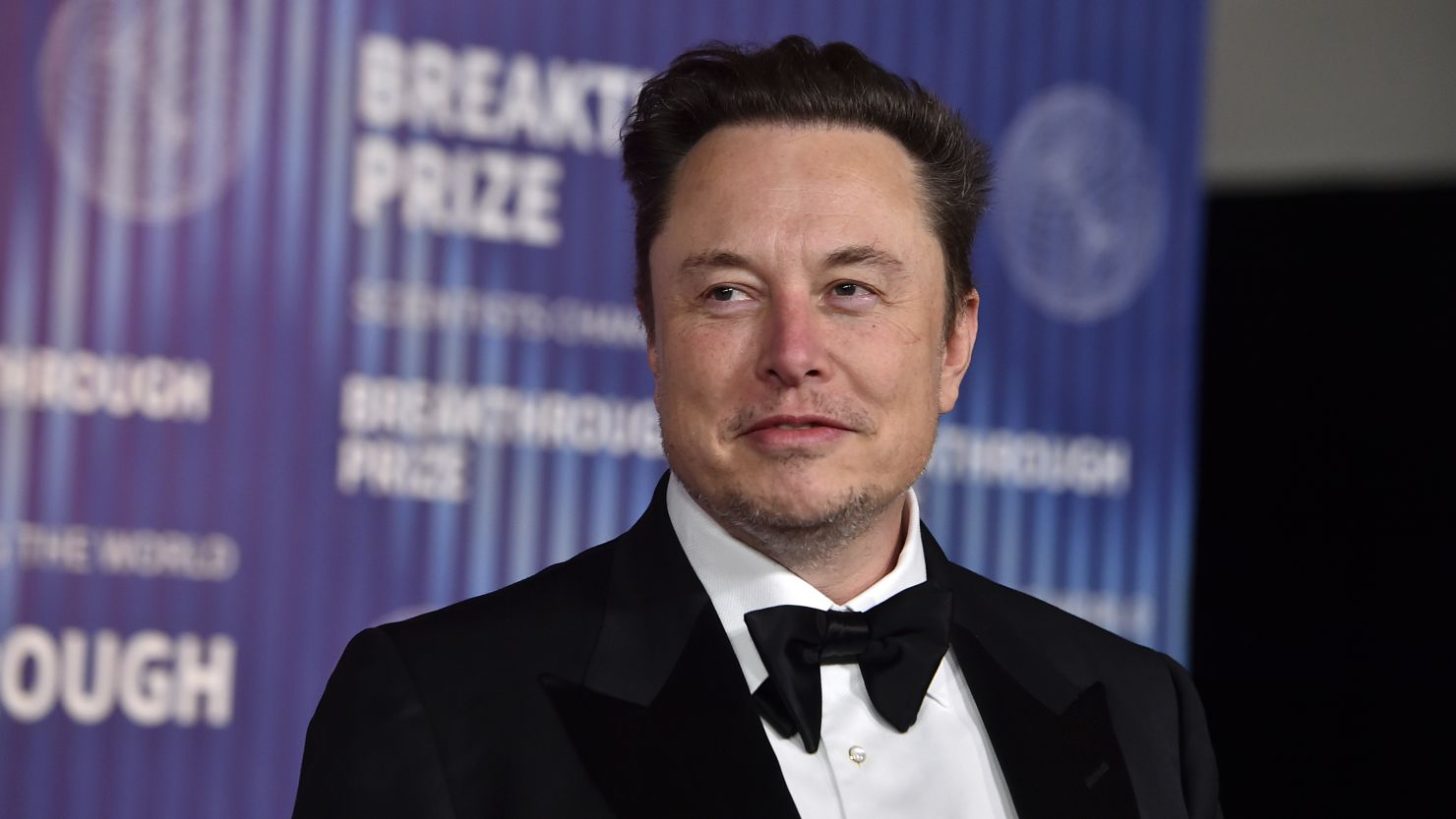
The news hit like a thunderbolt across the financial world this week. Tesla shareholders voted overwhelmingly to approve a pay package that could make Elon Musk not just wealthy, not just absurdly wealthy, but the world’s first trillionaire. I sat at my desk reading the headlines, and I felt that familiar electricity that courses through me whenever I witness someone rewriting the rules of what’s possible. This isn’t just a story about one man’s potential wealth. This is a masterclass in vision, risk, and the fundamental principles that separate those who dream from those who build empires.
Let me share what happened, and more importantly, what it means for anyone serious about creating extraordinary wealth in their lifetime. Tesla’s shareholders approved a stock grant that could give Musk up to 423.7 million additional shares over the next decade. If Tesla reaches an $8.5 trillion market cap, those shares could be worth approximately $1 trillion. To put that in perspective, getting all the shares available under this package would be equivalent to earning $275 million per day for the next ten years. This dwarfs any executive pay package in history, and the crowd at the shareholder meeting broke into cheers when the results were announced.
But here’s what most people miss when they see these numbers. This isn’t guaranteed wealth. This is a bet. A massive, audacious, world-changing bet on the future. For Musk to receive this compensation, Tesla needs to jump 466% from today’s stock price and reach a valuation about 70% higher than Nvidia, currently the world’s most valuable company. The company also needs to achieve a series of ambitious operational and financial targets. This is performance-based wealth creation at its most extreme level, and it contains lessons that every entrepreneur and wealth builder needs to understand.
“The biggest risk is not taking any risk. In a world that’s changing really quickly, the only strategy that is guaranteed to fail is not taking risks,” Mark Zuckerberg once said, and nowhere is this more evident than in what Musk is doing right now.
Think about the psychology of this moment. Musk is already worth an estimated $473 billion, making him the richest person on Earth. He could retire tomorrow and live in unimaginable luxury for multiple lifetimes. But that’s not what drives people who operate at this level. What we’re witnessing is someone who has transcended the pursuit of money for money’s sake and moved into the realm of building the future itself. He’s betting everything on a vision that most people think is science fiction: a world of robotaxis, humanoid robots, and artificial intelligence that fundamentally reshapes human civilization.
During the shareholder meeting, Musk spent more time talking about robots that haven’t even gone on sale yet than he did about Tesla’s actual car business. He predicted that Tesla’s humanoid robots will become the biggest product of all time, bigger than cell phones, bigger than anything in history. He envisions a future where every human on Earth has their own personal robot, where these machines could replace surgeons, end global poverty, and reshape the global economic order. He claims they could be produced for around $20,000 each and sold for roughly the price of a car.
Now, you might be thinking,
“Darpan, that sounds crazy. How does this help me build wealth?”
Stay with me, because this is where the magic happens. The lesson isn’t about robots or electric cars or trillion-dollar valuations. The lesson is about understanding how extraordinary wealth is created in the modern world, and it comes down to three fundamental principles that I’ve been studying, implementing, and living by in my own entrepreneurial journey.
First, the greatest wealth is created by solving problems at scale. Musk isn’t trying to make a better car or a more efficient factory. He’s trying to fundamentally change transportation, energy, and labour itself. Every billionaire I’ve studied shares this trait: they think in terms of millions and billions of people, not dozens or hundreds. When you’re building your business, ask yourself constantly: how can I scale this? How can I serve not just my local market but the entire world? In our connected digital age, there are no excuses for thinking small. The same technology that allows me to run my blog and businesses allows anyone to reach global audiences. The question is whether you have the audacity to actually think that big.
Second, align your compensation with value creation, not time. Musk doesn’t take a salary from Tesla. Zero. His entire wealth is tied to creating value for shareholders and pushing the company toward seemingly impossible goals. This is the opposite of how most people think about money. Most people trade time for money, working hourly or even on fixed salaries. But real wealth creators tie their fortunes to outcomes, to results, to value delivered to the marketplace. As entrepreneurs, we need to constantly shift from being paid for our time to being paid for the value we create. When you create a product, a system, a piece of content, or a business that generates value while you sleep, you’ve broken free from the time-for-money trap that keeps most people financially imprisoned.
Third, and this is perhaps the most important lesson, the future belongs to those who can see it before others and bet everything on that vision. Tesla has had a rocky year. Sales and profits have plunged. The company faces billions in potential lost revenue from reduced government support for electric vehicles. Any rational analysis of the current situation would suggest caution and risk mitigation. But Musk and his team are doing the opposite. They’re dismissing current problems and betting that the future isn’t about selling more electric cars today but about creating autonomous vehicles and humanoid robots tomorrow. This is the mindset that separates wealth creators from wealth preservers.
I’ve learned through my own journey as a serial entrepreneur that the moments of greatest opportunity are often disguised as moments of greatest risk. When everyone else sees chaos and uncertainty, visionaries see the blank canvas on which the future will be painted. The key is developing the knowledge, the skills, and the financial intelligence to distinguish between reckless gambling and calculated vision. Musk isn’t blindly hoping for success. Tesla needs to hit specific targets, meet concrete milestones, and deliver actual products to market. The vision is wild, but the execution is measured and strategic.
This brings me to something that often gets overlooked in discussions about wealth creation: the importance of control and equity. Musk has stated that he needs these additional shares not primarily for wealth but for control over the company’s direction. He wants enough voting power to maintain his vision but not so much that he can’t be removed if he “goes insane,” as he put it. This reveals a sophisticated understanding of corporate governance and the real nature of power in wealth creation. Owning equity in valuable enterprises is how generational wealth is built. It’s not about having a high income. It’s about owning pieces of businesses that grow in value over time.
For those of us building our own ventures, this principle is crucial.
Are you building something you own, or are you just creating another job for yourself? Are you developing assets that appreciate, or are you stuck in a cycle of constantly trading time for money?
These questions determine whether you’ll achieve financial independence or remain on the hamster wheel regardless of how hard you work.

The potential for Tesla to reach an $8.5 trillion valuation might seem absurd, but remember that just fifteen years ago, the idea of a trillion-dollar company seemed nearly impossible. Now we have several. The pace of technological change and wealth creation is accelerating, not slowing down. The opportunities available to entrepreneurs today are unprecedented in human history. We have access to global markets, instant communication, powerful computing, artificial intelligence, and financing options that simply didn’t exist a generation ago.
What Musk’s story teaches us is that in this era of exponential technological growth, the biggest winners won’t be those who play it safe and optimize existing systems. The trillion-dollar opportunities will go to those who reimagine entire industries, who build for a future that doesn’t exist yet, and who have the courage to stake everything on a vision that others call impossible. Whether Tesla reaches that $8.5 trillion valuation or not, whether Musk becomes a trillionaire or not, is almost beside the point. The real story is that someone dared to create a structure where such an outcome was even possible.
As I write this, I’m reminded of why I’m so passionate about studying the strategies of the ultra-successful and implementing them in my own life and businesses. It’s not about worshiping wealth for wealth’s sake. It’s about understanding that wealth creation is fundamentally about value creation, and that the most profound way to improve your own life is to create massive value for others. Musk’s potential trillion-dollar payday only exists because Tesla shareholders believe he will create trillions in value for them and for the world.
So what does this mean for you? It means that whatever you’re building right now, whether it’s a startup, a blog like mine, an investment portfolio, or a side hustle, you need to constantly ask yourself if you’re thinking big enough. Are you solving problems at scale? Are you building assets or just income streams? Are you betting on the future or protecting the past? Are you learning from those who’ve achieved extraordinary success and actually implementing those strategies in your life?
The path to extraordinary wealth isn’t mysterious or secret. It’s right there in front of us in the stories of people like Musk who are building it in real-time. The question is whether we have the courage, the vision, and the relentless execution to follow those principles in our own lives. The trillion-dollar era is here, and the opportunities for wealth creation have never been greater. The only question is whether you’re ready to think big enough to seize them.
 Darpan Sachdeva is the CEO and Founder of Nobelthoughts.com. Driven by a profound dedication to Entrepreneurship, Self-development, and Success over an extended period, Darpan initiated his website with the aim of enlightening and motivating individuals globally who share similar aspirations. His mission is to encourage like-minded individuals to consistently pursue success, irrespective of their circumstances, perpetually moving forward, maintaining resilience, and extracting valuable lessons from every challenge.