by Darpan Sachdeva
The conversation I absorbed today left me with one resounding truth that every entrepreneur needs to tattoo on their brain: SOLVE EVERYTHING.
We’re living through the most extraordinary period of capital deployment in human history. Trillion-dollar pay packages for Elon. $600 billion dinner commitments from Tim Cook and Zuckerberg. OpenAI burning through $119 billion by 2029. These aren’t just numbers—they’re the fuel for the greatest entrepreneurial renaissance we’ve ever witnessed.
But here’s what most people miss while getting dizzy from these astronomical figures: This isn’t the death of entrepreneurship. It’s the birth of its most powerful form.
The David vs. Goliath Paradigm Shift
Traditional thinking says you can’t compete with the MAG 7. You can’t go toe-to-toe with companies spending trillions on R&D. That thinking is not just wrong—it’s dangerously outdated.
The entrepreneurs who are winning today—the ones building the next wave of unicorns and decacorns—have figured out the secret: Make the giants your R&D department.
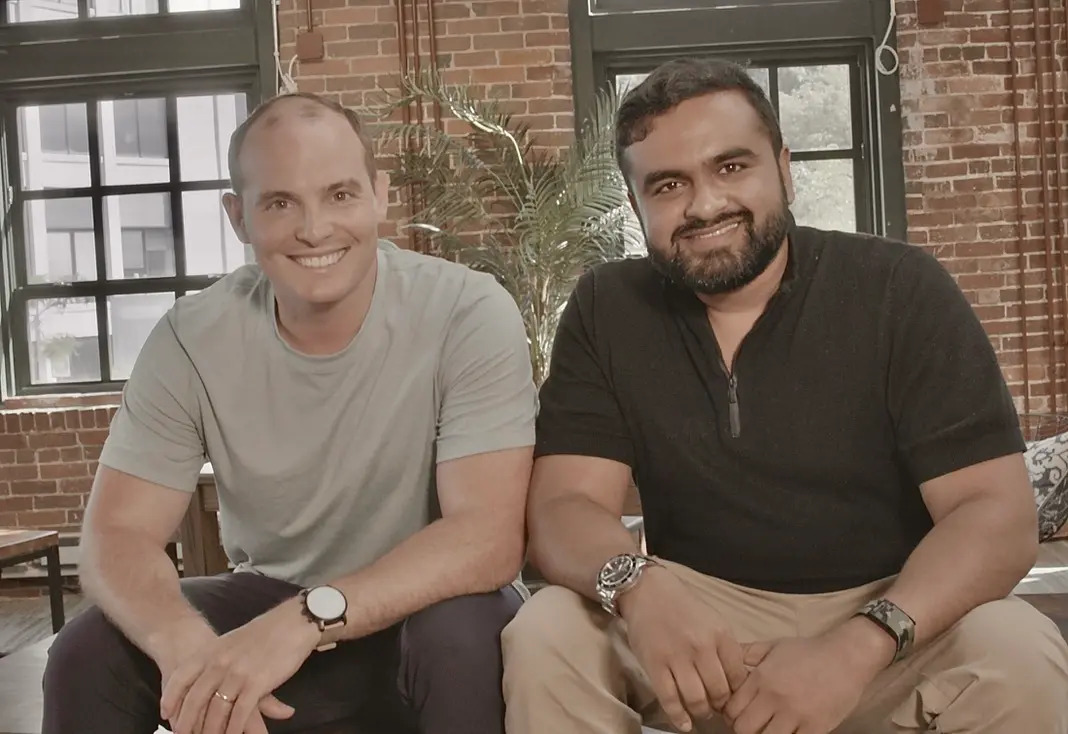
Take Brian Elliott and Sid Pardeshi, the founders behind Blitzy, an autonomous software development platform that just shattered every benchmark in AI-powered coding. These guys aren’t trying to build their own foundation models. Instead, they’re orchestrating Google’s Gemini, OpenAI’s GPT, and Anthropic’s Claude in a symphony that produces results none of these trillion-dollar companies can achieve alone.
Their approach?
When frontier AI labs release better models, Blitzy doesn’t worry about being disrupted—they celebrate. Every billion dollars Google pours into AI research makes Blitzy’s product exponentially better. That’s not competition; that’s strategic symbiosis.
The Great Refactor: Why Legacy is the New Gold Mine

While everyone’s chasing the latest AI girlfriend app or photo-sharing platform, the real money is in the basement of every Fortune 500 company. Millions of lines of COBOL and PL/1 code running mission-critical systems that companies are too terrified to touch.
Blitzy recently ingested 100 million lines of legacy code and achieved an unprecedented 86.8% success rate on the SWE-bench verified benchmark—crushing the previous record of 75.2%. But here’s the kicker: they did what would take human developers years to understand in a matter of days.
This is the “Great Refactor”—the systematic rewriting of civilization’s software infrastructure. It’s not just a business opportunity; it’s an economic imperative. And it represents exactly the kind of deep, domain-specific problem that young entrepreneurs typically overlook in favour of sexier consumer apps.
The New Entrepreneurial Playbook
Dave Blunden, the venture capitalist who spotted these opportunities early, shared something profound: two-thirds of today’s most promising AI startups require deep domain expertise, not dorm room brainstorming. The winners aren’t the ones who can prompt-engineer their way to a decent demo. They’re the ones who understand the messy, complex, trillion-dollar problems that have been ignored for decades.
Here’s the new entrepreneurial framework:
1. Find the Deepest Problem: Don’t look for the obvious opportunities. Look for the problems that make people’s eyes glaze over. Industrial automation. Actuarial risk modeling. Legacy code modernization. These are where fortunes are built.
2. Become the Customer of Giants: Design your business so that every improvement in foundation models makes you stronger, not weaker. When OpenAI releases GPT-5, you should be popping champagne, not panicking.
3. Embrace “Solve Everything” Thinking: The abundance economy rewards entrepreneurs who think at civilizational scale. Don’t build a feature. Build a system that can tackle an entire class of problems.
4. Speed is Your Superweapon: While trillion-dollar companies are stuck in committee meetings about what to say at corporate dinners , you can ship world-changing products. Blitzy’s team moves so fast they rebuilt entire enterprise applications over weekends.
The Age of Abundance Entrepreneurship

We’re entering what I call the “Age of Abundance Entrepreneurship.” When the cost of intelligence and energy approaches zero, the most scarce resource becomes the ability to identify and solve complex problems at scale.
The entrepreneurs who understand this—like the founders of Mercor, who went from $30 million to $10 billion valuation in two years, or Blitzy, which is processing billions of lines of code daily—aren’t competing with the giants. They’re riding the wave that trillion-dollar investments create.
As Sid Pardeshi brilliantly put it: “We just got a trillion dollars of R&D for free.”
The Modern Entrepreneur’s Motto: SOLVE EVERYTHING
The conversation crystallized something I’ve believed for years but never articulated so clearly. The most successful entrepreneurs of the next decade won’t be the ones who avoid competition with trillion-dollar companies. They’ll be the ones who turn that competition into rocket fuel.
When Kevin Weil from OpenAI says they want a “huge, thriving ecosystem of partners,” he’s not being altruistic. He’s being strategic. OpenAI needs companies like Blitzy to exist because they drive demand for foundation models while solving problems OpenAI can’t or won’t tackle directly.
This is the entrepreneur’s golden age. While others worry about being steamrolled by AGI, the smart money is on founders who embrace AI as their ultimate force multiplier. The question isn’t whether AI will replace entrepreneurs—it’s which entrepreneurs will use AI to solve everything.
The world’s biggest problems remain the world’s biggest business opportunities. And now, for the first time in history, we have trillion-dollar toolkits to solve them.
The giants have given us the weapons. The question is:
What problems will you choose to obliterate?
 Darpan Sachdeva is the CEO and Founder of Nobelthoughts.com. Driven by a profound dedication to Entrepreneurship, Self-development, and Success over an extended period, Darpan initiated his website with the aim of enlightening and motivating individuals globally who share similar aspirations. His mission is to encourage like-minded individuals to consistently pursue success, irrespective of their circumstances, perpetually moving forward, maintaining resilience, and extracting valuable lessons from every challenge.