by Darpan Sachdeva
Friends, I woke up this morning and read something that sent electricity through my veins. Not the kind that powers your laptop, but the kind that powers dreams. The kind that reminds you why we’re alive in the most extraordinary time in human history.
India is building an AI “data city” on a scale that would make science fiction writers blush.
Let me say that again because it deserves to sink in. A data city. Not just a tech park. Not just another software hub. An entire ecosystem spanning a 100-kilometer radius, roughly the size of Taiwan, dedicated to artificial intelligence and digital infrastructure. And it’s happening right now, in Visakhapatnam, a port city better known for cricket than cutting-edge technology.
But here’s what really got me: This isn’t just about India. This is about what happens when vision meets velocity, when nations stop making excuses and start making history. And more importantly, what it means for you, wherever you are reading this from.
The Revolution That Refuses to Wait
“The AI revolution is here, no second thoughts about it,” declared Nara Lokesh, the IT minister spearheading this audacious project. And as someone who has built businesses, failed at some, succeeded at others, and watched technology reshape everything we thought we knew about opportunity, I can tell you he’s not exaggerating.
We’re not preparing for a future revolution. We’re living through it right now.
Consider these numbers that should make every entrepreneur, student, professional, and dreamer sit up straight. Andhra Pradesh has secured investment agreements worth $175 billion across 760 projects. Google is investing $15 billion for its largest AI infrastructure hub outside the United States. Microsoft announced a $17.5 billion investment, their largest ever in Asia. Reliance Industries, Brookfield, and Digital Realty are pouring $11 billion into AI data centers.
These aren’t just numbers on a spreadsheet. These are declarations of faith in human potential. These are bets on what happens when 1.4 billion minds get connected to the most powerful technology ever created.
From Third World to Third in the World
Here’s a value bomb for you: India now ranks third globally in AI power, above South Korea and Japan, based on over 40 indicators including patents, private funding, and innovation capacity. Let that marinate for a moment.
A nation that many still mistakenly associate with poverty and backwardness is now ahead of some of the world’s most advanced economies in one of the most crucial technologies of our century. Stanford University’s Institute for Human-Centered AI confirms this isn’t hype. It’s happening.
But here’s what moves me even more than the rankings. It’s the mindset shift. Lokesh, a Stanford-educated minister who is the son of the man who helped create Cyberabad in Hyderabad, said something profound:
“Every industrial revolution has always created more jobs than it has displaced. But it has created those jobs in countries that have embraced the industrial revolution.”
Read that again. The opportunity doesn’t go to those who resist change. It flows to those who run toward it.
The Execution Economy
You know what separates dreamers from achievers?
Execution.
And this is where the story gets really interesting.
Andhra Pradesh isn’t just planning. They’re offering land at one US cent per acre for major investors. They’re positioning Visakhapatnam as a landing point for submarine internet cables linking India to Singapore. They’re targeting six gigawatts of data center capacity, with three already signed. They’ve received in-principle approval for six nuclear power plants to power this digital beast.
Lokesh says they’re executing “at a pace that the country has never seen.” And here’s the personal development lesson embedded in national strategy: Speed matters. Velocity creates its own opportunities. While others deliberate, while committees meet to discuss forming committees, someone else is building the future.
This reminds me of a quote that has guided my entrepreneurial journey:
“The future belongs to those who believe in the beauty of their dreams and have the courage to execute them at a speed that makes skeptics uncomfortable.” – Anonymous
The skeptics will always find reasons why something can’t be done. They’ll point out the challenges, the risks, the historical precedents. But the builders? They’re too busy building to argue.
Learning Without Ego
Here’s another value bomb that applies whether you’re running a nation or running your life: Learn from everyone, including your rivals.
Lokesh openly admits they’ve “learned from China” about creating industrial clusters and systematically lifting people out of poverty at speed. There’s no ego here, no false pride. Just pragmatic wisdom.
How many of us refuse to learn from competitors because of pride? How many businesses fail because leaders won’t study what works elsewhere? How many personal dreams die because we’re too stubborn to model success wherever we find it?
India, despite its historic tensions with China, is saying: “Show us what works, and we’ll adapt it, improve it, and scale it.” That’s not weakness. That’s strategic intelligence.
The Global Technology Chessboard
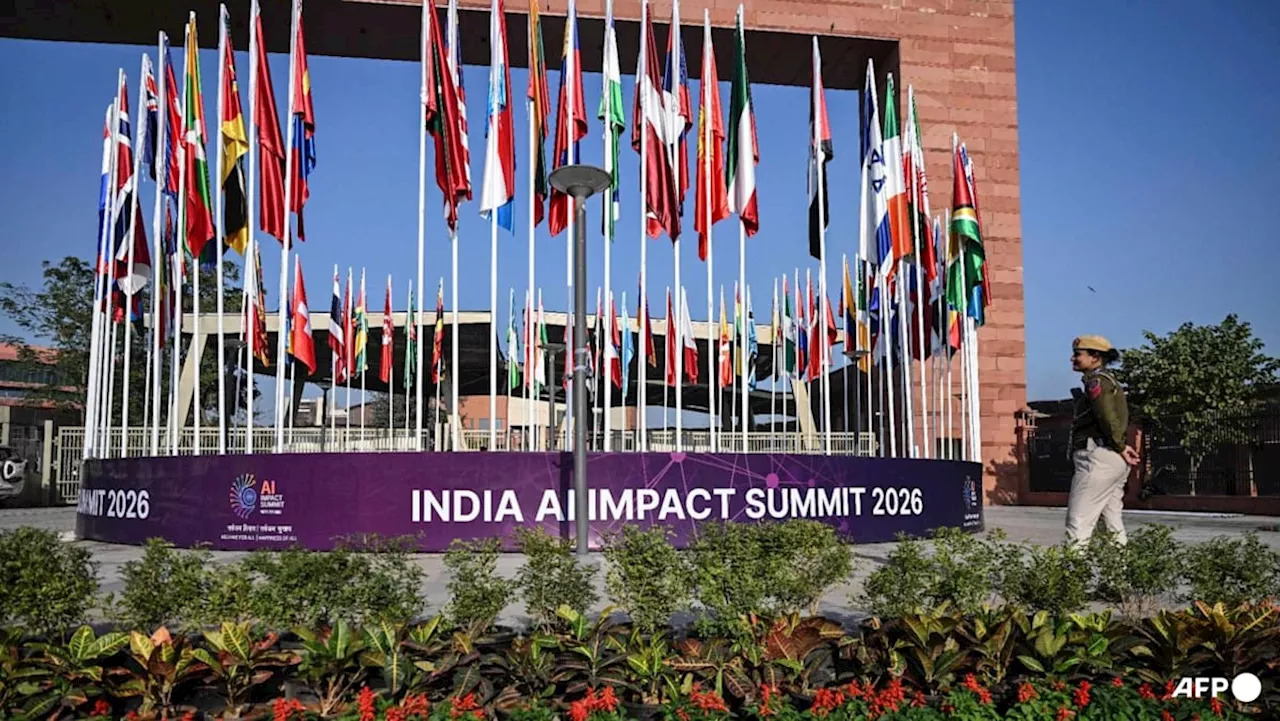
The recent AI Global Summit in New Delhi, attended by tech leaders from around the world and even French President Emmanuel Macron, signals something crucial. Technology leadership is becoming geopolitically strategic.
The old world order was built on manufacturing, natural resources, and military might. The new world order is being built on data, algorithms, and computational power. And India, with over a billion internet users and a massive talent pool, is positioning itself not as a spectator but as a player.
For those of you reading this from the United States, UK, Europe or anywhere else, this isn’t a threat. It’s proof of possibility. It’s evidence that rapid transformation is achievable when vision meets commitment.
The same principles that apply to nations apply to individuals. You don’t need to be born into the perfect circumstances. You need to make strategic moves, execute with speed, learn constantly, and position yourself where the future is being built.
The Personal Prosperity Connection
Now let’s bring this home to your life, your career, your financial future.
If India can go from being seen as a technology consumer to a technology powerhouse, from lagging in AI to ranking third globally, what does that tell you about your own capacity for transformation?
If a city known for cricket can become a hub for artificial intelligence, what limitations are you accepting about yourself that might just be outdated perceptions?
The jobs being created in this AI revolution, the opportunities emerging, the wealth being generated, they’re not limited by geography anymore. A developer in India can work for a Silicon Valley startup. An entrepreneur in Africa can build solutions for European markets. A student anywhere can access world-class education online.
But here’s the catch that isn’t really a catch at all: You have to embrace the revolution. You have to invest in learning AI, understanding technology, developing skills that machines can’t easily replicate. You have to move at the speed of relevance.
Education as Liberation
One of the most exciting aspects of this AI infrastructure boom is its potential to democratize opportunity through education. When you build digital highways, knowledge flows faster. When you create data cities, you create learning ecosystems.
India’s progress isn’t just about data centers and investments. It’s about creating an environment where a kid from a small town can access the same computational resources, the same learning tools, the same global opportunities as someone from a metropolitan hub.
This is why I’m so passionate about technology and education. They’re liberation tools. They break down the old barriers of geography, privilege, and circumstance. They make merit and effort matter more than birthplace and background.
The Warning in the Opportunity
I’d be dishonest if I didn’t mention the critical voices. Some argue India still lags in high-end computing power and commercial AI deployment, that it’s more consumer than creator. Some question whether these data centers will create meaningful employment.
These concerns deserve attention, but they shouldn’t paralyze action. Every transformation faces legitimate challenges. The question is whether you let those challenges stop you or whether you work through them while moving forward.
The same applies to your personal growth. Yes, there are obstacles to learning new skills, changing careers, or starting that business. Yes, there are legitimate concerns about AI replacing jobs or creating inequality. But the answer isn’t to opt out. The answer is to opt in intelligently, to upskill constantly, to stay adaptable.
Your Move in This Global Game
So what does all of this mean for you, sitting wherever you are, reading these words?
It means the world is being remade right now, and you get to decide whether you’re a spectator or a participant. It means that transformation at any scale, national or personal, follows similar principles: clear vision, rapid execution, learning from the best, and the courage to make big moves.
It means that prosperity in the coming decades will flow to those who understand and leverage AI and technology, regardless of their current starting point. It means that your nationality, your background, your past, they matter far less than your willingness to embrace change and execute with speed.
India’s AI data city isn’t just a story about technology infrastructure. It’s a story about what happens when you stop accepting limitations and start building futures. It’s about choosing speed over perfection, execution over endless planning, and possibility over precedent.
The Invitation
Friends, we’re living through the most extraordinary time in human history. The AI revolution isn’t coming; it’s here. Nations are making massive moves. Billions of dollars are flowing. Futures are being built.
And you?
You have a choice. You can watch it happen, or you can be part of making it happen. You can worry about what AI might take away, or you can focus on what AI enables you to create. You can accept your current limitations, or you can build your own data city in your mind, an ecosystem of skills, knowledge, and capabilities that makes you relevant and valuable in this new world.
India is dreaming big and executing fast. The question is: Are you?
The revolution is here. No second thoughts about it. Embrace it.
 Darpan Sachdeva is the CEO and Founder of Nobelthoughts.com. Driven by a profound dedication to Entrepreneurship, Self-development, and Success over an extended period, Darpan initiated his website with the aim of enlightening and motivating individuals globally who share similar aspirations. His mission is to encourage like-minded individuals to consistently pursue success, irrespective of their circumstances, perpetually moving forward, maintaining resilience, and extracting valuable lessons from every challenge.