by Darpan Sachdeva
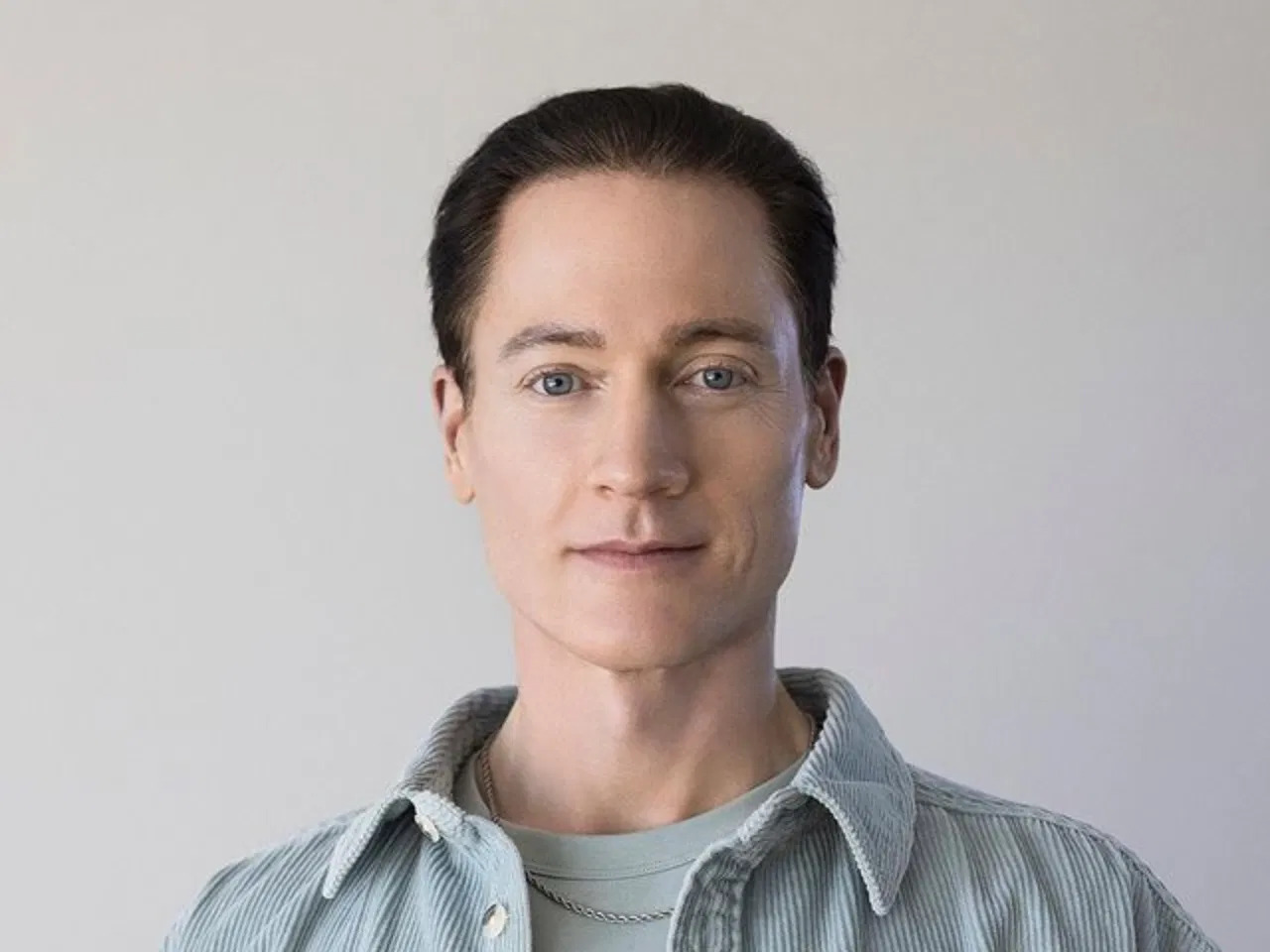
Sitting here in my Poole flat, wrestling with the harsh realities of financial strain in my digital marketing venture, I’ve been searching for answers. Not just about business, but about what it truly means to succeed as an entrepreneur and as a human being. That search led me to the extraordinary story of Bryan Johnson, and frankly, it’s shaken everything I thought I knew about success to its core.
Bryan Johnson sold his payment processing company Braintree for $800 million in 2013. But here’s what captivated me – that same year, he got divorced, left the Mormon church, and overcame a decade-long battle with depression. Most entrepreneurs would celebrate the exit and call it success. Bryan used it as a launching pad for something far more audacious.
Today, he spends $2 million annually on a single objective that sounds absurd until you really understand it: Don’t die.
As someone currently drowning in the chaos of entrepreneurial struggle – sleepless nights, financial pressure, the constant weight of uncertainty – I initially dismissed this as the eccentric luxury of the ultra-wealthy. How wrong I was.
The Algorithm Revolution That Changes Everything
Bryan’s journey began with a profound realization during his darkest period. For ten years, depression had him trapped in a prison of his own mind. His brain was literally encouraging him to commit suicide daily, while simultaneously driving him to overeat and make destructive choices. He was paralyzed – stuck between a failing marriage, a religion that no longer served him, financial pressures, and the weight of fatherhood.
But here’s the entrepreneurial lesson that hit me like lightning: Bryan realized his mind couldn’t be trusted to act in his own best interest.
Think about that for a moment. How many business decisions have you made from a place of stress, fear, or emotional reactivity? How many times has your mind led you down paths that seemed logical in the moment but proved destructive in hindsight?
Bryan made a radical decision. He opted out of letting his mind run the show and instead built an algorithm based on data from every organ in his body. His kidneys, liver, heart, and lungs now call the shots – not his restless, anxious brain.
This isn’t just about health. This is about entrepreneurial decision-making at its most evolved level.
The Ultimate Entrepreneurial Mindset Shift
What struck me most profoundly was Bryan’s approach to time and legacy. While most of us are trapped in quarterly thinking or yearly goals, Bryan operates on a completely different timeline. He asks himself one question that every entrepreneur should ask: “What one thing can I do that will matter in the 25th century?”
This perspective shift is revolutionary. It forces you to filter out the noise – the social media metrics, the short-term revenue spikes, the validation-seeking behaviours that drain our energy. It demands you focus only on what creates lasting value.
For Bryan, that became Project Blueprint – a systematic approach to human optimization that he believes could fundamentally change how our species approaches existence. But the deeper lesson for entrepreneurs is this: when you think in centuries, not quarters, your entire decision-making framework transforms.
As I write this, facing my own financial crisis, I’m applying this lens to my situation. Instead of panic-driven decisions or quick-fix solutions, I’m asking: “What am I building that creates genuine, lasting value?” The answer changes everything.
The Courage to Be Misunderstood
Perhaps the most entrepreneurial trait Bryan embodies is his complete indifference to being misunderstood. The man goes to bed at 8PM religiously, eats his last meal at 11 AM, takes 111 pills daily, and has systematically eliminated every form of conventional social conformity from his life.
The internet mocks him. Critics call him obsessive. Former friends drift away because he won’t compromise his protocols for social events.
His response? “I’ve never felt more free.”
This is the essence of entrepreneurial courage – the willingness to be completely misunderstood in service of something larger than yourself. Every successful entrepreneur I’ve studied shares this trait. They’re willing to look weird, to be isolated, to have people think they’ve lost their minds – because they’re operating from a different paradigm entirely.
Right now, as I navigate the judgment and whispered concerns from family about my struggling business, Bryan’s example reminds me that being misunderstood is often the price of innovation.
The Data-Driven Revolution
Bryan’s approach to health mirrors the most successful entrepreneurial methodology: measure everything, optimize relentlessly, remove emotion from decision-making. He tracks hundreds of biomarkers, follows scientific evidence religiously, and has achieved something remarkable – he’s reversed his biological age and maintains sleep scores in the 99.9th percentile.
But here’s what’s truly brilliant: he’s removed the authority from his mind and given it to systems and data.
This is exactly what successful entrepreneurs do. They build systems that work regardless of how they feel on any given day. They create processes that remove the volatility of emotion from critical business decisions.
The lesson for those of us building businesses is clear: stop trusting your mind to make decisions your data should be making. Build systems that work even when you’re tired, stressed, or overwhelmed.
The Ultimate Mission
Bryan’s ultimate vision extends far beyond personal health. He believes humanity is at a critical inflection point where we must learn to cooperate with artificial intelligence or face extinction. His personal transformation is actually a proof of concept for species-level change.
This is thinking at an entrepreneur’s highest level – using personal experience as a laboratory for solving civilization-scale problems.
“The fate of intelligence in this corner of the universe may depend upon us right now,” Bryan says. This isn’t hyperbole. It’s the kind of thinking that creates movements, not just businesses.
The Revolution Starts Within
As I reflect on my own entrepreneurial journey – the sleepless nights, the financial stress, the constant battle against self-doubt – Bryan’s story offers a different path forward. Not through grinding harder or finding the next growth hack, but through fundamental transformation of how we operate as humans.
The revolution he’s calling for isn’t political or social. It’s personal. It starts with each of us revolting against the culture of self-destruction that permeates entrepreneurship – the glorification of burnout, the addiction to stress, the acceptance of slow suicide in the name of “hustle.”
“The weapons at our disposal are to go to bed on time, to eat healthy, to not get addicted to things,” he says. “It sounds weird and weak and different, but revolting against the culture of death… these foundations map the future of our existence.”
As entrepreneurs, we’ve been conditioned to believe success requires sacrifice of our health, relationships, and wellbeing. Bryan Johnson proves this is not just wrong – it’s counterproductive.
The most radical thing an entrepreneur can do in 2025 isn’t to launch another app or chase another exit. It’s to systematically optimize every aspect of their existence in service of something that will matter long after we’re gone.
That’s not just entrepreneurship. That’s revolution.
“Success is not final, failure is not fatal: it is the courage to continue that counts.” – Winston Churchill
Watch this fascinating exploration of longevity and entrepreneurial thinking:

What revolution are you building in your own life?
 Darpan Sachdeva is the CEO and Founder of Nobelthoughts.com. Driven by a profound dedication to Entrepreneurship, Self-development, and Success over an extended period, Darpan initiated his website with the aim of enlightening and motivating individuals globally who share similar aspirations. His mission is to encourage like-minded individuals to consistently pursue success, irrespective of their circumstances, perpetually moving forward, maintaining resilience, and extracting valuable lessons from every challenge