by Darpan Sachdeva
The coffee had gone cold an hour ago, but I hadn’t noticed. My laptop screen glowed with another rejection email from a potential client. The digital marketing agency I’d poured my heart into was bleeding money faster than I could stanch the wounds.
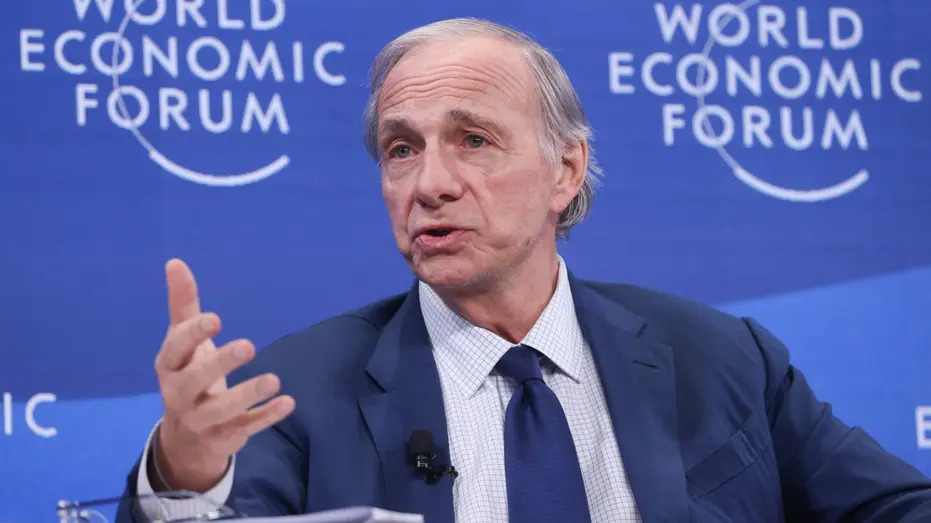
That’s when Ray Dalio’s voice cut through my despair like a lighthouse beam piercing fog.
“Pain plus reflection equals progress.”
Five simple words that would reshape everything I thought I knew about failure, success, and the brutal mathematics of building wealth in a world where empires rise and fall with startling predictability.
Ray Dalio didn’t just build the world’s largest hedge fund by accident. He decoded something most of us never see coming: the invisible cycles that govern nations, economies, and yes, even our personal fortunes. What he discovered should terrify and inspire every entrepreneur willing to listen.
Here’s what kept me awake that night, and why it should matter to you too.
The Map Nobody Talks About
Imagine you’re building a house, but nobody told you the ground beneath shifts every eighty years. That’s essentially how most of us approach business and wealth building. We operate as if the present is permanent, as if the economic weather will always be sunny.
Dalio spent decades studying five massive forces that create predictable cycles lasting roughly eighty years.
1.The money-debt cycle that creates wealth gaps.
2.Internal conflicts between left and right.
3.Geopolitical tensions between rising and declining powers.
4 Acts of nature.
5.Technological innovation that reshapes everything.
Right now, we’re eighty years from World War Two. The symptoms are everywhere if you know how to look.
According to him ,The UK is hemorrhaging millionaires faster than any other major economy. The United States faces unprecedented internal division. China’s rise challenges the existing world order. Technology threatens to replace not just our muscles, but our minds.
This isn’t pessimism. It’s pattern recognition.
And here’s what nobody tells you: individual fortunes are made and lost within these larger cycles. The entrepreneurs who thrive aren’t the ones who ignore the storm. They’re the ones who learn to surf the tsunami.
The Bankruptcy That Built a Fortune
In 1982, Ray Dalio was dead broke. He’d predicted a debt crisis that came to pass, but his timing was catastrophically wrong. He lost everything. Had to borrow four thousand dollars from his father just to pay family bills.
Most people would have crawled back to Wall Street, tail between legs, accepting whatever corporate job offered safety. Dalio did something different. He reflected.
That reflection birthed two principles that would eventually create one hundred fifty billion dollars in assets:
1.Radical open-mindedness
2.Systematic risk management.
He realized his greatest enemy wasn’t market volatility. It was his own certainty. His unwillingness to stress-test his assumptions. His ego’s desperate need to be right.
Sound familiar?
I’m writing this from my own valley of broken assumptions. Every “sure thing” client who disappeared. Every marketing strategy that worked until it didn’t. Every sleepless night wondering if I should abandon entrepreneurship for the false security of employment.
But here’s what Dalio taught me that business school never did: your lowest moment isn’t your ending. It’s your beginning, if you have the courage to reflect instead of just react.
The Smart Rabbit Principle
There’s a Chinese saying Dalio loves:
“A smart rabbit has three holes.”
In our hyperconnected world, we’ve forgotten this ancient wisdom. We anchor ourselves geographically, financially, and mentally to single points of failure. We buy houses we can’t afford to leave. We specialize so narrowly that we become brittle. We build businesses dependent on platforms we don’t control.
The smart entrepreneurs I know are building optionality into everything. Multiple revenue streams. Multiple geographies. Multiple skill sets. They’re not paranoid; they’re prepared.
This doesn’t mean becoming a digital nomad or cryptocurrency fanatic. It means understanding that flexibility is the ultimate competitive advantage in an uncertain world.
I am restructuring my agency after reading Dalio’s work, I am trying stop chasing the biggest clients and start building the most resilient systems. I am have diversified not just my services, but my entire approach to creating value.
The Technology War Nobody’s Watching
While we debate social media algorithms, a more fundamental battle rages. Dalio calls it the technology war, and he’s convinced that whoever wins this war wins everything: the economic war, the geopolitical war, the future itself.
Artificial intelligence isn’t just changing how we work. It’s redefining what it means to be valuable in an economy. The entrepreneurs who thrive won’t be those who fight this change, but those who learn to dance with it.
I’ve started using AI not as a replacement for human creativity, but as an amplifier. The same principle Dalio used to build decision-making systems that could process information faster and more objectively than human emotion allows.
The question isn’t whether technology will displace human workers. The question is whether you’ll be displaced, or whether you’ll become the one doing the displacing.
Principles Over Passion
Here’s where Dalio diverges from typical entrepreneurial advice. He doesn’t tell you to “follow your passion.” He tells you to make your work and your passion the same thing, but don’t forget about the money part.
This isn’t cynicism. It’s wisdom.
I spent years believing that if I just worked harder, if I just cared more, success would follow. What I learned is that caring without capability is just expensive therapy. Passion without principles is just expensive hobby.
His approach is different. Understand your nature. Find work aligned with that nature. Build principles for navigating reality as it is, not as you wish it were. Surround yourself with people who can stress-test your thinking without destroying your confidence.
Most importantly: learn to see patterns instead of just events. Everything that happens to you has happened before, to someone else, in some form. The lessons are already written. You just have to have the humility to read them.
The Arc You Can’t See
From inside your life, you can’t see your life arc. You’re too close to the canvas to see the painting. But understanding that you’re on a journey with predictable seasons changes everything.
In your twenties and thirties, you’re learning and experiencing. The most important thing you can do is maximize learning, not maximize income. Surround yourself with the best people you can find, even if they can’t pay you what you think you’re worth.
In your forties and fifties, you’re leveraging what you’ve learned. This is when principles compound. When relationships mature into real value. When experience becomes wisdom.
In your sixties and beyond, you’re transitioning. Passing along what you’ve built. Finding meaning in legacy rather than accumulation.
This isn’t about getting rich quick. It’s about getting rich inevitably, by understanding how the game really works.
The Meditation Advantage
Here’s something that surprised me about Dalio: he credits much of his success to Transcendental Meditation. Not as mystical practice, but as practical tool for better decision-making.
Meditation doesn’t just calm you down. It aligns your conscious and subconscious mind. It creates space between stimulus and response. It allows you to see reality more clearly, without the distortion of ego or fear.
In a world where information travels at light speed with wisdom moving at human speed, the ability to pause, reflect, and respond rather than just react becomes your ultimate competitive advantage.
I started meditating not because I became spiritual, but because I became desperate for better decisions. The ROI on twenty minutes of daily stillness has been impossible to calculate and impossible to ignore.
Building Wealth in a Changing World
Watch Ray’s breakdown of these principles in action here:
The old rules of wealth building assumed stable ground. Buy a house. Max out your pension pot. Work for thirty years. Retire at sixty-five.
Those rules were written for a different world.
Today’s wealth builders understand that the ground is shifting beneath us. They build portfolios of skills, not just assets. They create value that transcends geography and currency. They think in decades, not quarters.
Most importantly, they understand that wealth isn’t just about money. It’s about optionality. The freedom to choose where to live, how to work, and who to become.
That freedom comes from understanding how the machine works, and positioning yourself to benefit from forces most people don’t even know exist.
The Question That Changes Everything
As I sit here, rebuilding from my own financial wreckage, I keep coming back to one question Dalio poses: Are you going to be part of the solution, or part of the problem?
The forces he describes aren’t optional. They’re happening whether we pay attention or not. The only question is whether we’ll be swept along by them, or whether we’ll learn to navigate them.
For entrepreneurs, this isn’t academic. This is survival.
The next decade will separate those who understand these cycles from those who don’t. Those who build antifragile businesses from those who build brittle ones. Those who create real value from those who just rearrange existing wealth.
I know which side I choose to be on.
“Make your work and your passion the same thing, but don’t forget about the money part.” – Ray Dalio
You can purchase Ray’s essential guide to navigating our changing world:
The storm is coming. The question isn’t whether you’ll survive it.
The question is whether you’ll learn to dance in the rain.
 Darpan Sachdeva is the CEO and Founder of Nobelthoughts.com. Driven by a profound dedication to Entrepreneurship, Self-development, and Success over an extended period, Darpan initiated his website with the aim of enlightening and motivating individuals globally who share similar aspirations. His mission is to encourage like-minded individuals to consistently pursue success, irrespective of their circumstances, perpetually moving forward, maintaining resilience, and extracting valuable lessons from every challenge.