by Darpan Sachdeva
There’s something profoundly humbling about studying the minds of those who’ve achieved what most of us only dream about. As I sit here in my modest Poole flat, wrestling with the same entrepreneurial challenges that keep me awake at 3 AM, I find myself drawn to stories that remind me why this journey is worth every sleepless night, every rejection, every moment of doubt.
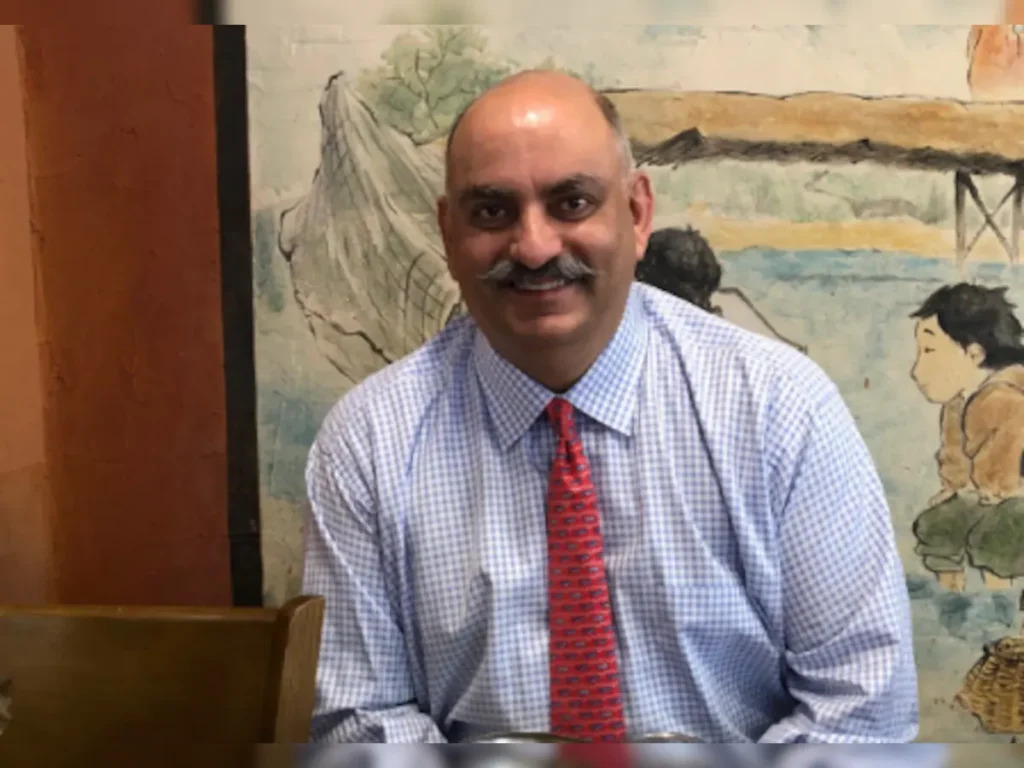
Today, I want to share with you the extraordinary wisdom of Mohnish Pabrai, a man whose journey from a middle-class Indian immigrant family to managing hundreds of millions of dollars reads like a masterclass in turning simplicity into sophistication, and patience into prosperity.
The Ordinary Beginning of an Extraordinary Mind
Mohnish Pabrai’s story begins in a place many of us can relate to – uncertainty, modest means, and big dreams. Born into a family that ran motels across America, Pabrai learned early that success wasn’t about having the fanciest tools or the most complex strategies. It was about understanding value, working hard, and making smart decisions with whatever resources you had.
What strikes me most about Pabrai’s early years is how unremarkable they seem on the surface. Here was a young man studying engineering, working in IT, starting a small business – nothing that screamed “future billionaire investor.” Yet, beneath this ordinary exterior was brewing an extraordinary understanding of how wealth is truly created.
The lesson here isn’t just inspirational fodder – it’s deeply practical. Too often, we entrepreneurs get caught up believing we need revolutionary ideas or perfect conditions to succeed. Pabrai’s journey reminds us that extraordinary results often come from applying ordinary principles with extraordinary consistency.
The Dhandho Way: Business Lessons from Gujarati Entrepreneurs
Pabrai’s investment philosophy is beautifully captured in his seminal work, The Dhandho Investor: The Low-Risk Value Method to High Returns. But this isn’t just another investment book – it’s a profound exploration of how certain communities have created wealth for generations through simple, time-tested principles.
The word “Dhandho” comes from Gujarati and essentially means “business” – but Pabrai unpacks it to reveal something much deeper. He studies the Gujarati Patel community, particularly their success in the motel industry across America, to extract universal principles of wealth creation that any entrepreneur can apply.
The Patels didn’t revolutionize hospitality – they simply bought underperforming motels, improved operations, provided better service, and gradually built wealth through patient, methodical work. They focused on businesses they understood, minimized downside risk, and let compound growth work its magic over time.
This philosophy extends far beyond investing. As entrepreneurs, we’re constantly tempted by the next shiny opportunity, the revolutionary idea, the chance to disrupt entire industries. Pabrai’s work suggests there’s profound wisdom in finding simple businesses we can understand and improve, rather than chasing complexity for its own sake.
Learning from Legends: The Power of Cloning Success
One of the most powerful aspects of Pabrai’s approach is his shameless willingness to learn from and even clone the strategies of successful entrepreneurs and investors. He’s particularly influenced by Warren Buffett, but his admiration extends to a pantheon of business legends whose stories he studies obsessively.
Take his analysis of Richard Branson’s Virgin empire. Pabrai doesn’t just admire Branson’s success – he dissects the underlying principles that made Virgin work across diverse industries. He identifies Branson’s genius for entering established markets with better customer service, simpler pricing, and more personality than existing players. Virgin didn’t invent airlines, mobile phones, or music retail – they just did these things better than everyone else.
Similarly, Pabrai studies how entrepreneurs like Sam Walton built Walmart not through revolutionary retail concepts, but by obsessively focusing on small improvements in efficiency, customer service, and cost management. Walton’s genius wasn’t in creating something entirely new – it was in taking existing retail concepts and executing them better than anyone else.
This approach of studying and cloning success has profound implications for those of us still building our entrepreneurial muscles. Instead of trying to reinvent every wheel, we can study what’s already working and adapt those principles to our own contexts. There’s no shame in learning from the best – in fact, it’s one of the fastest paths to success.
The Mosaic Method: Piecing Together Investment Wisdom
In his second major work, Mosaic: Perspectives on Investing ,Pabrai expands on his philosophy by exploring how great investors develop their worldview through studying diverse sources and experiences. The mosaic metaphor is particularly powerful – no single piece of information gives you the complete picture, but when you combine insights from various sources, patterns begin to emerge.
This principle applies beautifully to entrepreneurship. The most successful business leaders I’ve studied don’t rely on single sources of inspiration or rigid adherence to one methodology. They’re constantly collecting insights from customers, competitors, adjacent industries, historical examples, and their own experiences, then combining these pieces into unique strategies for their specific contexts.
As I reflect on my own entrepreneurial journey, I realize how often I’ve looked for silver bullets – that one course, that one mentor, that one strategy that would unlock everything. Pabrai’s mosaic approach suggests a more patient, comprehensive method of learning that builds deep understanding over time.
The Psychology of Patience in a World of Quick Fixes
Perhaps the most challenging aspect of Pabrai’s philosophy for modern entrepreneurs is his emphasis on patience. In a world of overnight successes and viral growth, the idea of building wealth slowly through compound growth feels almost antiquated. Yet, the mathematics of compound growth remain as powerful today as they were a century ago.
Pabrai often references the Indian entrepreneur Dhirubhai Ambani, founder of Reliance Industries, who built one of India’s largest companies through decades of patient expansion and reinvestment. Ambani didn’t achieve success through quick flips or viral moments – he methodically built systems, relationships, and capabilities that could compound over time.
This patience extends beyond financial returns to the development of expertise itself. Pabrai has spent decades studying businesses, reading annual reports, understanding industries, and developing his judgment. His success isn’t the result of lucky timing or brilliant insights – it’s the compound effect of consistent learning and disciplined decision-making over many years.
For those of us earlier in our entrepreneurial journeys, this emphasis on patience is both challenging and liberating. Challenging because it requires us to think beyond immediate gratification and quarterly results. Liberating because it suggests that consistent effort over time can overcome many natural disadvantages.

Risk Management: The Foundation of Sustainable Success
One of Pabrai’s most valuable contributions to investment thinking is his framework for managing downside risk. His mantra of “heads I win, tails I don’t lose much” reflects a sophisticated understanding that preservation of capital is often more important than maximizing returns.
This philosophy has immediate applications for entrepreneurs. Too often, we’re encouraged to “bet the farm” on our ventures, to risk everything in pursuit of massive returns. Pabrai’s approach suggests a more nuanced strategy – taking calculated risks where the potential upside is substantial but the downside is limited and manageable.
Consider how this might apply to business decisions. Instead of investing everything in unproven marketing channels, we might test small amounts across multiple channels to understand what works before scaling up. Instead of hiring expensive teams before proving product-market fit, we might use contractors and automation to minimize fixed costs while we validate our assumptions.
The goal isn’t to avoid all risk – it’s to structure our risks so that we can survive our inevitable mistakes and still be in the game when opportunities present themselves. This approach requires patience and discipline, but it dramatically increases the likelihood of long-term success.
Building Systems for Scalable Decision Making
Throughout his career, Pabrai has developed systems and frameworks that allow him to make consistent decisions across different contexts. His investment checklist, his focus on certain types of businesses, his criteria for risk assessment – these aren’t rigid rules but flexible frameworks that guide his thinking.
For entrepreneurs, this systematic approach is invaluable. Instead of making every decision from scratch, we can develop our own frameworks based on our values, our strengths, and our understanding of what works in our specific contexts. These systems become increasingly powerful as they help us make better decisions more quickly while avoiding common pitfalls.
The development of such systems requires honest self-assessment. What are our natural biases? Where do we tend to make mistakes? What information do we need to make good decisions? How can we structure our environment to support better choices? These questions don’t have easy answers, but wrestling with them systematically can dramatically improve our decision-making over time.

As I continue building my own entrepreneurial systems here in the UK, I’m constantly inspired by Pabrai’s example of turning simple principles into sophisticated practice. His journey reminds me that success isn’t about having all the answers immediately – it’s about building the capabilities to find better answers over time.
The path from where I am today to where I want to be isn’t going to be a straight line. But studying minds like Mohnish Pabrai’s gives me confidence that with patience, discipline, and continuous learning, that path is not only possible but inevitable. The question isn’t whether we’ll face challenges and setbacks – it’s whether we’ll have the wisdom and systems to navigate them successfully.
In a world that celebrates overnight success and viral moments, there’s something deeply reassuring about Pabrai’s methodical approach to building lasting wealth and success. It suggests that those of us without natural advantages or perfect timing can still achieve extraordinary results through ordinary virtues applied extraordinarily well.
 Darpan Sachdeva is the CEO and Founder of Nobelthoughts.com. Driven by a profound dedication to Entrepreneurship, Self-development, and Success over an extended period, Darpan initiated his website with the aim of enlightening and motivating individuals globally who share similar aspirations. His mission is to encourage like-minded individuals to consistently pursue success, irrespective of their circumstances, perpetually moving forward, maintaining resilience, and extracting valuable lessons from every challenge.